'%3e%3cpath%20id='Vector'%20d='M11.474%207.12258C11.5964%207.0054%2011.6667%206.84133%2011.6667%206.66946C11.6667%206.49758%2011.5964%206.33613%2011.474%206.21633L6.89063%201.84133C6.64063%201.60175%206.24479%201.61217%206.00781%201.86217C5.77083%202.11217%205.77865%202.508%206.02865%202.74498L9.48177%206.04446H0.625C0.278646%206.04446%200%206.3231%200%206.66946C0%207.01581%200.278646%207.29446%200.625%207.29446H9.48177L6.02604%2010.5913C5.77604%2010.8309%205.76823%2011.2241%206.00521%2011.4741C6.24219%2011.7241%206.63802%2011.732%206.88802%2011.495L11.4714%207.11998L11.474%207.12258Z'%20fill='%23FCFCFC'/%3e%3c/g%3e%3cdefs%3e%3cclipPath%20id='clip0_0_36'%3e%3crect%20width='11.6667'%20height='13.3333'%20fill='white'/%3e%3c/clipPath%3e%3c/defs%3e%3c/svg%3e)


'%3e%3cpath%20id='Vector'%20d='M31.999%2031.9996H0V0H31.999V31.9996Z'%20fill='%23FF6600'/%3e%3cpath%20id='Vector_2'%20d='M9.26953%207.85547H11.7751L14.9995%2014.3543C15.4707%2015.3217%2015.8677%2016.2643%2015.8677%2016.2643C15.8677%2016.2643%2016.2896%2015.3466%2016.7854%2014.3543L20.0599%207.85547H22.3916L16.8597%2018.249V24.8719H14.7517V18.1249L9.26953%207.85547Z'%20fill='white'/%3e%3c/g%3e%3c/g%3e%3cdefs%3e%3cclipPath%20id='clip0_0_7'%3e%3crect%20width='32'%20height='32'%20rx='5'%20fill='white'/%3e%3c/clipPath%3e%3c/defs%3e%3c/svg%3e)




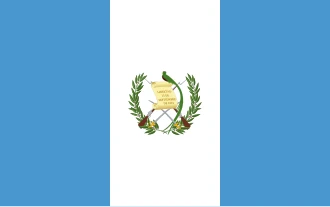
Guatemala Hiring at a Glance
Guatemala is the largest economy in Central America, with key sectors including agriculture (coffee, sugar, bananas), textiles and apparel manufacturing, food processing, construction, logistics, and a growing business process outsourcing (BPO) sector. Guatemala City functions as the primary commercial and financial hub. The country is increasingly used as a nearshore location for Spanish-speaking customer support and light manufacturing operations serving North America.
Employment relationships are governed by the Guatemalan Labor Code (Código de Trabajo), which establishes mandatory employment protections that cannot be waived by private agreement. The labor framework is protective of employees, particularly regarding severance, mandatory bonuses, minimum wage compliance, and social security registration.
Statutory employee entitlements include:
- Mandatory written employment contracts (for indefinite and fixed-term employment)
- Minimum wage compliance (sector-specific, updated annually)
- 15 working days of paid annual leave after one year of continuous service
- A mandatory Christmas bonus (Aguinaldo) equal to one month’s salary
- A mandatory “Bono 14” (14th-month bonus) equal to one month’s salary, paid in July
- Enrollment in the Guatemalan Social Security Institute (IGSS)
- Statutory severance protections
Failure to comply with mandatory bonus payments, social security registration, or proper termination procedure can result in labor court claims, administrative penalties, and retroactive wage assessments.
Key Characteristics of Guatemala’s Talent Market
- Young and growing workforce: Guatemala has a population exceeding 17 million, with a median age under 25, creating a continuously expanding labor supply.
- Manufacturing and export strength: Strong apparel and textile industries, along with food processing and agriculture exports.
- Expanding BPO and call center sector: Guatemala City hosts Spanish-English bilingual support centers serving U.S. clients.
- Cost-competitive wages: Labor costs are lower than in Mexico or Costa Rica, particularly outside the capital region.
- Strict bonus regime: Employers must budget for two mandatory additional monthly salary payments (Aguinaldo and Bono 14), significantly increasing total compensation cost.
Most In-Demand Skills in 2026
Guatemala’s hiring demand reflects its export and service economy:
- Bilingual Customer Support: English-Spanish call center agents, technical support representatives.
- Textile & Industrial Engineering: Production management, quality control, supply chain coordination.
- Accounting & Finance: Tax compliance, bookkeeping, multinational reporting support.
- IT & Systems Support: Helpdesk, infrastructure support, enterprise system administration.
- Logistics & Export Operations: Customs compliance, freight coordination, warehouse management.
Top Universities Supplying Talent
- Universidad de San Carlos de Guatemala (USAC) – Guatemala City – largest public university, strong in engineering and law.
- Universidad Rafael Landívar – private university with business and technology programs.
- Universidad del Valle de Guatemala (UVG) – private institution known for engineering and science.
- Universidad Francisco Marroquín (UFM) – private university with business and economics focus.
Salary Benchmarks for Roles in Guatemala
- Software Developer: GTQ 120,000 – 240,000
- Bilingual Customer Support: GTQ 60,000 – 110,000
- Finance Manager: GTQ 180,000 – 360,000
- Operations Manager: GTQ 160,000 – 300,000
- HR Manager: GTQ 140,000 – 260,000
(Salaries vary between Guatemala City and secondary regions.)
Employer of Record vs Legal Entity Setup in Guatemala
| Criteria | Employer of Record (EOR) | Legal Entity Setup |
|---|---|---|
| Time to Hire | 3–5 weeks | 2–4 months |
| Legal Employer | EOR | Your company |
| IGSS & Payroll | EOR handles | Employer required |
| Bonus Compliance | EOR manages | Employer liable |
| Entity Costs | None | Moderate |
| Termination Liability | Shared, EOR leads | Full employer liability |
| Ideal For | Market testing, remote hiring | Long-term operations |
To legally hire employees in Guatemala, a company must
- Incorporate a legal entity: Register the company with the Mercantile Registry (Registro Mercantil). Articles of incorporation must be notarized and publicly registered. No hiring may occur prior to entity formation.
- Obtain a Tax Identification Number (NIT): Register with the Superintendence of Tax Administration (SAT) for corporate taxation and payroll withholding.
- Register with IGSS (Instituto Guatemalteco de Seguridad Social): Mandatory social security enrollment for all employers and employees.
- Register employment contracts: Certain employment contracts must be filed with the Ministry of Labor.
- Enroll in payroll withholding system: Employers must withhold income tax (ISR) under Guatemalan tax law.
- Alternatively, engage an Employer of Record (EOR): An EOR hires employees through its registered entity and manages payroll, tax, and social security compliance.
Cost of Entity Setup in Guatemala
- Legal and notary fees: USD $1,500–$3,500 depending on structure.
- Registry and publication fees: Several hundred dollars.
- Minimum capital: No substantial statutory minimum for most company forms, though practical capitalization is common.
- Accounting and compliance services: USD $1,000–$2,000 annually.
- Typical timeline: 3–6 weeks.
Because of mandatory bonus obligations and termination protections, many foreign employers prefer EOR structures for small teams or market testing.
What Hiring Through an EOR Means in Guatemala
An Employer of Record (EOR) in Guatemala becomes the legal employer registered with the Superintendencia de Administración Tributaria (SAT), Instituto Guatemalteco de Seguridad Social (IGSS), and Ministry of Labour, while the employee works exclusively for your company. You manage daily responsibilities and performance, but the EOR assumes all statutory employer obligations under Guatemalan labour law.
Employment in Guatemala is governed primarily by:
- Código de Trabajo
- Social Security Law (IGSS regulations)
- Income Tax Law administered by SAT
- Aguinaldo (13th salary) Law
- Bono 14 (14th salary) Law
Foreign companies cannot legally employ workers in Guatemala without:
- A locally registered entity
- Tax registration with SAT
- Social security enrollment with IGSS
An EOR provides this full employer infrastructure without requiring you to establish a Guatemalan company.
An EOR in Guatemala handles:
- Labour Code-compliant employment contracts
- Payroll processing in GTQ (Guatemalan Quetzal)
- Income tax withholding
- IGSS social security contributions
- Mandatory Aguinaldo and Bono 14 payments
- Leave and public holiday compliance
- Severance and termination procedures
- Immigration and work permit support
This model is ideal for companies that want to hire in Guatemala without directly managing mandatory bonus payments, social security compliance, and strict termination laws.
Risk Involved in Both Models
Guatemala has a protective labour system with strong mandatory benefit requirements.
Key characteristics:
- Mandatory written employment agreements
- Social security registration via IGSS
- Two additional annual salary payments
- Strict severance rules
- Active labour court enforcement
Compliance failures can result in:
- Retroactive social security payments
- Fines and penalties
- Court-ordered compensation
- Reinstatement claims
EOR Vs. Entity: When to use What?
| Business Scenario | Best Hiring Method |
|---|---|
| Hiring 1–50 remote employees | EOR |
| Testing Guatemala market or small pilot teams | EOR |
| Want first hire in 48 hours | EOR |
| Building a permanent office or >100-person hub | Legal Entity |
| Providing regulated services (banking, manufacturing) | Legal Entity |
| Mix of small remote hires + core office team | Hybrid: EOR + Entity |
Why an EOR Is the Most Efficient Way to Hire in Guatemala
Guatemala offers strong talent in manufacturing, agriculture, BPO services, call centers, and logistics. However, hiring is governed by mandatory double-bonus payments, significant social security contributions, and strong employee protection under the Labour Code.
An EOR is not simply a payroll processor. It is the legal employer recognized by SAT and IGSS, responsible for:
- Labour Code compliance
- Tax withholding
- Social security administration
- Bonus payments
- Termination handling
This allows foreign companies to operate in Guatemala without directly assuming employer liability.
#1. EOR Manages IGSS Social Security Contributions
Employers must contribute to IGSS.
Contribution rates typically total around 12–13% of salary, including employer and employee portions.
IGSS covers:
- Health insurance
- Maternity benefits
- Pension contributions
Failure to comply can result in:
- Interest and penalties
- Government sanctions
- Litigation exposure
An EOR ensures proper registration and timely remittance.
#2. EOR Handles Mandatory Aguinaldo (13th Month Salary)
Guatemala requires employers to pay the Aguinaldo, equivalent to one month’s salary, paid in December.
It is calculated based on annual earnings.
Failure to comply can result in:
- Labour claims
- Financial penalties
An EOR ensures correct accrual and payment.
#3. EOR Manages Bono 14 (14th Month Salary)
In addition to Aguinaldo, Guatemala mandates a Bono 14, equal to one month’s salary, typically paid in July.
This effectively increases annual payroll costs by two additional months’ wages.
An EOR ensures:
- Accurate accrual tracking
- On-time payment compliance
#4. EOR Controls Termination and Severance Risk
Termination in Guatemala can be costly if not handled correctly.
Without justified cause, employers must pay:
- Severance (one month’s salary per year of service)
- Proportional Aguinaldo and Bono 14
- Accrued vacation
Improper dismissal can result in:
- Court-ordered compensation
- Reinstatement
An EOR manages:
- Legal termination grounds
- Severance calculation
- Labour dispute defense
EOR vs. PEO in Guatemala: How to Decide the Right Hiring Model?
A PEO in Guatemala cannot legally employ workers without the client having a registered entity.
| Feature | EOR | PEO |
|---|---|---|
| Legal employer | ✔️ EOR | ❌ Client |
| IGSS compliance | EOR | Client |
| Aguinaldo & Bono 14 | EOR | Client |
| Termination liability | EOR leads | Client liable |
| Time to hire | 3–5 weeks | 2–4 months |
For foreign companies without a local entity, EOR is the compliant option.
Payroll, Taxes, and Monthly Compliance in Guatemala
Payroll in Guatemala includes income tax withholding, social security contributions, and mandatory bonus accrual planning.
Income Tax (ISR)
Guatemala applies a progressive income tax system. Employers must withhold ISR monthly from employee salaries and remit to SAT.
Social Security Contributions (IGSS)
Employer contribution: Approximately 10.67% of gross salary
Employee contribution: Approximately 4.83% of gross salary
These contributions fund healthcare, disability, and pension systems.
Mandatory Bonuses
Aguinaldo (December): 100% of one month’s salary
Bono 14 (July): 100% of one month’s salary
Together, these two bonuses effectively increase annual salary cost by approximately 16.67% (2 extra months over 12).
When social security and bonuses are factored in, total employment cost can increase by 25–35% above base monthly salary.
Monthly employer obligations include:
- Withholding and remitting ISR
- Paying IGSS contributions
- Maintaining electronic payroll records
- Accruing and reserving funds for Aguinaldo and Bono 14
Failure to remit IGSS contributions can result in fines and employer liability for employee medical expenses.
Salary Structure: Where Most Compliance Issues Begin
The most frequent compliance failures involve:
- Failure to accrue Aguinaldo and Bono 14 properly
- Incorrect IGSS contribution calculations
- Misclassification of contractors
- Improper termination without severance payment
Under the Labor Code, unjustified dismissal requires severance equivalent to one month of salary for each year of service (pro-rated for partial years). Employers must also pay pending bonuses, unused vacation, and proportional benefits at termination.
Guatemalan labor courts typically interpret ambiguities in favor of employees, increasing employer exposure in termination disputes.
What Monthly Payroll Operations in Guatemala Actually Involve
Each payroll cycle requires:
- Collect attendance, overtime, commissions, and allowances.
- Calculate gross monthly salary.
- Withhold ISR using SAT tax tables.
- Calculate IGSS employer and employee contributions.
- Accrue Aguinaldo and Bono 14 proportionally each month.
- Issue compliant payslips.
- Remit ISR to SAT and contributions to IGSS.
- Maintain payroll documentation for statutory audit retention.
Step-by-Step Onboarding Process With an EOR in Guatemala
Hiring in Guatemala involves tax registration, social security enrollment, and strict benefit compliance.
1. Verify EOR Registration
Confirm the EOR is registered with:
- SAT
- IGSS
- Ministry of Labour
2. Determine Contract Type
Guatemala recognizes:
- Indefinite contracts (default)
- Fixed-term contracts
Improper classification increases severance exposure.
3. Validate Salary and Minimum Wage Compliance
EOR ensures compliance with:
- Sector-based minimum wage
- Overtime rules
4. Calculate Total Employment Cost
Includes:
- Social security contributions
- Aguinaldo accrual
- Bono 14 accrual
- Severance exposure
5. Draft Labour Code-Compliant Contract
Must include:
- Job duties
- Compensation
- Work schedule
- Termination terms
6. Register Employee With IGSS
Registration must occur immediately upon hiring.
7. Establish Payroll and Bonus Tracking
EOR sets up:
- Monthly payroll
- Double-bonus accrual tracking
- Leave tracking
8. Immigration Compliance (If Applicable)
For foreign employees, EOR manages:
- Work permits
- Residency documentation
9. Execute First Payroll
Includes:
- Salary payment
- IGSS contributions
- Tax reporting
10. Ongoing Compliance Management
EOR oversees:
- Monthly tax filings
- Social security reporting
- Labour inspections
11. Termination and Final Settlement
EOR manages:
- Notice compliance
- Severance calculation
- Final bonus payments
- Labour dispute handling
Most employer disputes in Guatemala arise from termination and bonus miscalculations.
Build Your Guatemala Team with Bolto EOR
Hiring in Guatemala requires careful management of mandatory double bonuses, social security compliance, and strict termination protections.
Bolto’s Employer of Record model absorbs:
- Labour Code complexity
- IGSS compliance risk
- Aguinaldo and Bono 14 administration
- Termination and litigation exposure
This allows you to expand into Guatemala without setting up a local entity.
Full Legal Employer Coverage in Guatemala
Bolto becomes the legal employer before:
- SAT
- IGSS
- Ministry of Labour
- Labour courts
Bolto manages:
- Contracts and compliance
- Payroll and statutory filings
- Bonus and severance administration
- Termination execution
You manage employee performance. Bolto manages legal risk.
Built for Central America Expansion
With Bolto EOR:
- Hire quickly
- Avoid entity setup costs
- Skip social security registration complexity
- Exit without liquidation procedures
Transparent Cost Structure
Bolto provides:
- Detailed statutory breakdowns
- Bonus accrual visibility
- Predictable EOR fees
No hidden liabilities.
No unexpected compliance penalties.
End-to-End Employee Lifecycle Management
Bolto manages:
- Contract drafting
- Payroll and tax reporting
- IGSS compliance
- Bonus and leave administration
- Termination handling
You never interact directly with Guatemalan labour authorities.
Designed for Risk-Controlled Expansion in Guatemala
Guatemala enforces strict penalties for:
- Social security underpayment
- Failure to pay Aguinaldo or Bono 14
- Improper termination
Bolto enables hiring in Guatemala without inheriting employer liability risks.