'%3e%3cpath%20id='Vector'%20d='M11.474%207.12258C11.5964%207.0054%2011.6667%206.84133%2011.6667%206.66946C11.6667%206.49758%2011.5964%206.33613%2011.474%206.21633L6.89063%201.84133C6.64063%201.60175%206.24479%201.61217%206.00781%201.86217C5.77083%202.11217%205.77865%202.508%206.02865%202.74498L9.48177%206.04446H0.625C0.278646%206.04446%200%206.3231%200%206.66946C0%207.01581%200.278646%207.29446%200.625%207.29446H9.48177L6.02604%2010.5913C5.77604%2010.8309%205.76823%2011.2241%206.00521%2011.4741C6.24219%2011.7241%206.63802%2011.732%206.88802%2011.495L11.4714%207.11998L11.474%207.12258Z'%20fill='%23FCFCFC'/%3e%3c/g%3e%3cdefs%3e%3cclipPath%20id='clip0_0_36'%3e%3crect%20width='11.6667'%20height='13.3333'%20fill='white'/%3e%3c/clipPath%3e%3c/defs%3e%3c/svg%3e)


'%3e%3cpath%20id='Vector'%20d='M31.999%2031.9996H0V0H31.999V31.9996Z'%20fill='%23FF6600'/%3e%3cpath%20id='Vector_2'%20d='M9.26953%207.85547H11.7751L14.9995%2014.3543C15.4707%2015.3217%2015.8677%2016.2643%2015.8677%2016.2643C15.8677%2016.2643%2016.2896%2015.3466%2016.7854%2014.3543L20.0599%207.85547H22.3916L16.8597%2018.249V24.8719H14.7517V18.1249L9.26953%207.85547Z'%20fill='white'/%3e%3c/g%3e%3c/g%3e%3cdefs%3e%3cclipPath%20id='clip0_0_7'%3e%3crect%20width='32'%20height='32'%20rx='5'%20fill='white'/%3e%3c/clipPath%3e%3c/defs%3e%3c/svg%3e)




When you’re comparing PEO platforms to what you’re running now, the first question to ask is who actually owns the compliance risk. Traditional HR software gives you tools and leaves you responsible for filings, tax updates, and catching errors before they turn into penalties. A PEO becomes the employer of record, which means they file under their own tax IDs and carry the liability for getting it right. That structural difference is what separates a vendor relationship from a co-employment model that actually takes work off your plate.
TLDR:
-
PEO software consolidates payroll, benefits, and compliance in one system, replacing the disconnected mix of tools most companies default to
-
You gain access to enterprise-grade health insurance and 401k plans at group rates by pooling with hundreds of other businesses
-
Automated tax filings and payroll processing cut manual errors while saving 8 hours per week on admin work
-
Co-employment moves compliance liability to the PEO, which becomes employer of record for payroll and handles tax remittances directly
-
Bolto combines AI recruiting, global payroll across 180+ countries, and PEO services in one system with 99.8% payroll accuracy
What Is PEO Software and How Does It Work
A Professional Employer Organization, or PEO, is a co-employment arrangement where a third-party provider shares employer responsibilities with your company. You keep control of day-to-day work, performance, and hiring decisions. The PEO handles payroll processing, tax filings, benefits administration, and compliance.
PEO software is the tech layer that makes this model work. It ties together HR administration, payroll runs, benefits enrollment, and compliance tracking under one roof, replacing the patchwork of disconnected tools most companies default to early on.
The Co-Employment Model Explained
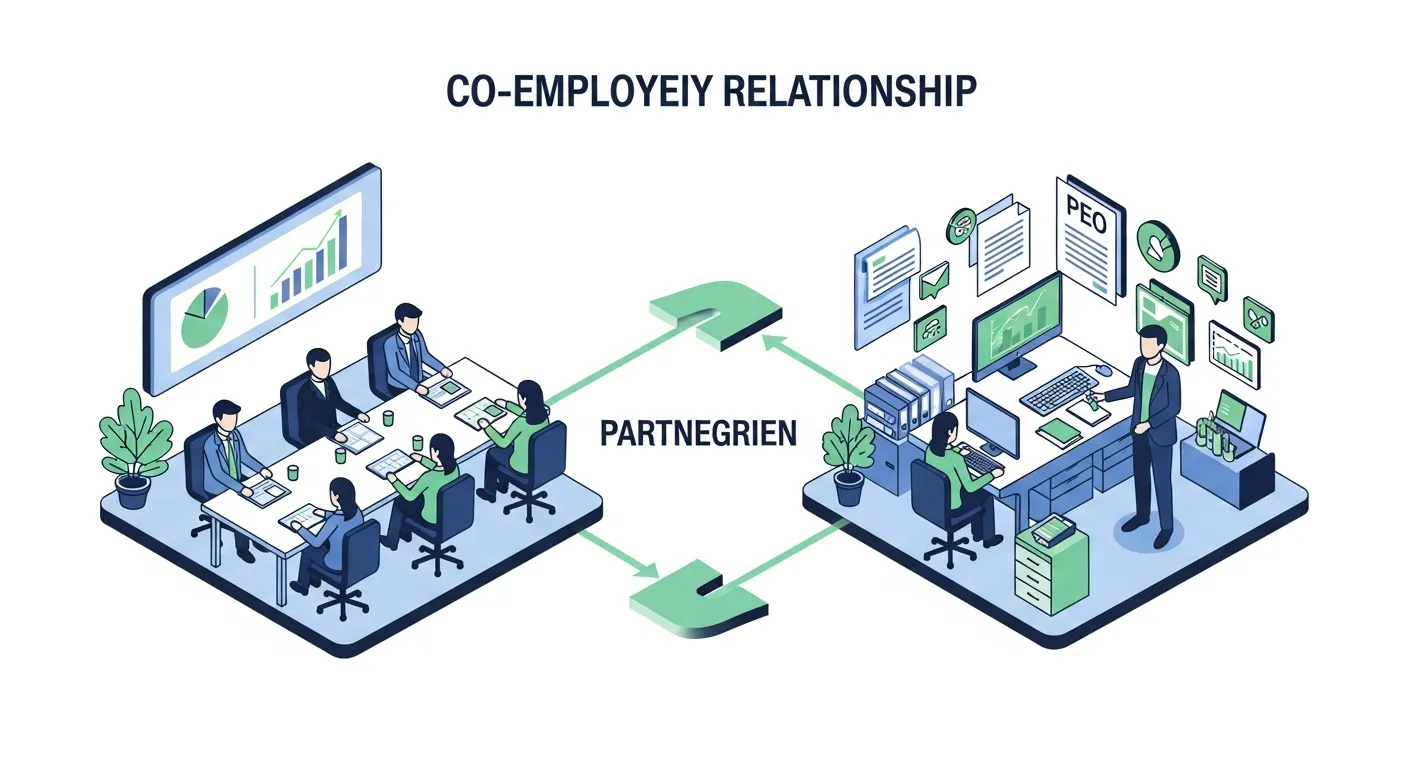
You remain the working employer, directing how and when work gets done. The PEO becomes the employer of record for payroll and HR purposes, running payroll under its own tax IDs, administering benefits through its master plans, and carrying certain compliance responsibilities. This split is what allows PEOs to pool risk across many companies and offer smaller employers access to enterprise-grade benefits at lower rates.
What separates PEO software from standard HR software is the service layer underneath it. You’re buying into a relationship where the PEO actively manages filings, tax remittances, and regulatory changes on your behalf.
The Business Case for PEO Solutions in 2026
The case for PEO adoption comes down to two operational advantages: access and time. According to NAPEO industry research, businesses using a PEO grow twice as fast, see 12% lower employee turnover, and are 50% less likely to go out of business. The ROI from cost savings alone averages 27%.
Much of that value comes from access. Small and mid-sized companies can’t negotiate the same benefits rates a large employer can. A PEO pools hundreds of businesses together, which unlocks enterprise-grade health insurance, 401k plans, and workers’ comp coverage at rates most growing companies could never secure independently.
There’s also the admin burden factor. HR compliance, payroll tax filings, and benefits enrollment consume real hours every week, and for founders especially, those hours carry an opportunity cost that’s easy to feel even when it’s hard to put a number on.
Core Features of Modern PEO Software
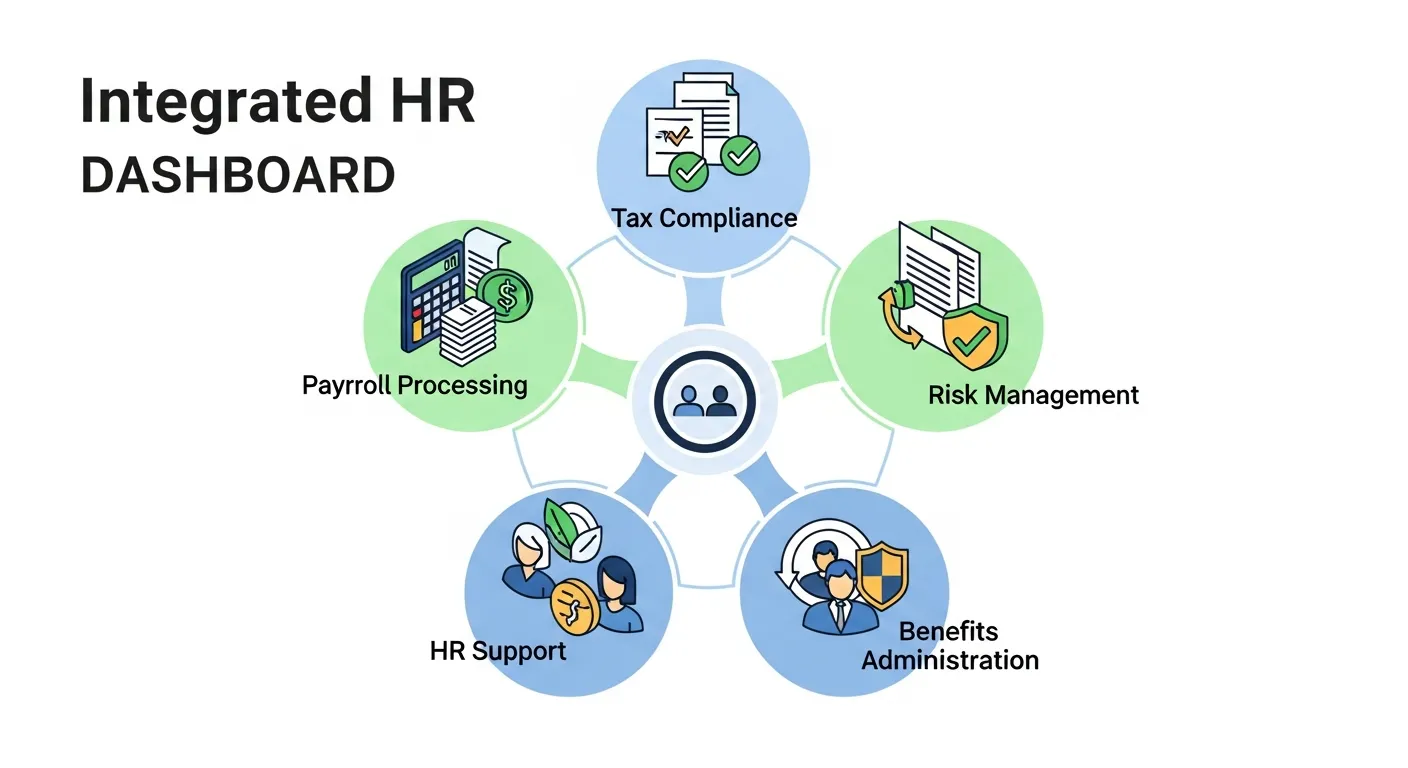
Most PEO software covers five core areas. Each one maps to a problem that becomes expensive when managed through separate tools.
-
Payroll processing: Automated calculations, tax withholding, and on-time disbursements across pay schedules
-
Tax compliance: Federal, state, and local filings handled automatically with real-time regulatory updates
-
Benefits administration: Health, dental, vision, and 401k enrollment and renewals managed in one place
-
HR support: Onboarding workflows, policy documentation, and employee records centralized by default
-
Risk management: Workers’ comp, EPLI coverage, and misclassification guardrails built into the co-employment structure
The fragmentation problem is real. A company running separate payroll software, a benefits broker, an HR system, and manual compliance tracking pays for multiple tools and pays with the time spent putting together data across all of them, catching errors that should never have occurred, and chasing updates across vendors that never communicate with each other.
Good PEO software collapses that stack. When payroll, benefits, and compliance share the same data layer, errors go down and admin time drops with them.
How PEO Software Handles Payroll and Tax Compliance
Payroll sounds simple until something goes wrong. Manual processes carry real risk. Payroll errors translate into financial penalties, back payments, and compliance exposure that compounds fast.
PEO software closes that gap through automation. Tax withholdings, deductions, and filings across federal, state, and local levels get calculated and submitted without manual input. When regulations change, the system updates automatically instead of waiting for someone to catch it.
The structural advantage here matters: because the PEO is the employer of record for payroll purposes, it files under its own tax IDs and carries the compliance responsibility for timely remittances. That moves the burden away from your team and onto a system built to manage it.
Benefits Administration Through PEO Software
Hiring against companies with 500+ employees is tough when your health plan looks like an afterthought by comparison. Benefits are often the deciding factor for candidates weighing offers, and smaller companies lose that battle regularly.
PEOs change the math. By pooling employees across hundreds of client companies, they negotiate health, dental, vision, and 401k plans at group rates that individual small businesses simply cannot access alone. The coverage quality goes up while the per-employee cost comes down.
What Gets Covered
-
Medical, dental, and vision through major carriers at group rates that would otherwise require a much larger headcount to access
-
401k plans with employer match options, giving small businesses a retirement benefit competitive with larger employers
-
Workers’ compensation coverage under the PEO’s master policy, removing the need to source a separate policy
-
EPLI often included or available as an add-on
-
Supplemental coverage like life and disability insurance
Enrollment and renewals run through the PEO software directly, so employees manage their own elections without HR chasing paperwork. Open enrollment windows, qualifying life events, dependent additions, and plan changes all flow through one system instead of through a broker via email.
The compliance side matters too. ACA eligibility tracking, COBRA notice requirements, and benefits termination timelines are handled within the software, reducing the risk of missing a deadline that triggers a penalty. This is general information, not legal advice; consult an employment lawyer about your specific situation.
Worker Classification and Compliance Risk Management
Misclassifying a worker is far more than a paperwork error, which is why many tech startups turn to specialized EOR software. Under IRS rules, intentional misclassification bypasses the reduced-rate relief under IRC Section 3509, triggering liability for 20% of wages paid and 100% of FICA taxes owed from both employer and employee portions, plus criminal charges including fines and potential imprisonment (IRS, Publication 15, 2026).
PEO software helps by building classification guardrails into the co-employment structure itself. Because the PEO is the employer of record for payroll purposes, it has a direct stake in getting classification right. Most solutions include classification guidance, contract reviews, and compliance checks that catch red flags before they become audit triggers.
The Cost of HR System Fragmentation
Most companies accumulate separate payroll, benefits, and compliance tools over time, and that stack compounds the problem. It explains a lot about why HR feels so hard, especially for startups comparing the best EOR options.
When payroll lives in one system and benefits in another, data does not flow between them. Every gap becomes a manual reconciliation task. Every manual task is a chance for an error.
The downstream costs compound quickly: duplicate data entry, missed filing deadlines, benefits enrollment gaps, and payroll errors that require correction cycles. Beyond the direct dollar cost, there’s the management overhead of maintaining vendor relationships across six-plus systems, each with its own contract, support queue, and renewal cycle.
Consolidated PEO software cuts through that by running payroll, benefits, and compliance on a shared data layer. One system, one source of truth.
PEO vs Traditional HR Software: Understanding the Difference
Traditional HR software gives you tools. A PEO gives you tools plus a service layer that actively manages what those tools track.
The core difference is accountability. With standalone HRIS or payroll software, your team is still responsible for filings, compliance updates, and catching errors. The software automates the mechanics, but the liability stays with you. In a PEO arrangement, the provider shares that liability by becoming the employer of record for payroll and benefits purposes.
When Each Model Makes Sense
-
Traditional HR software fits well when you already have in-house HR expertise, a stable domestic workforce, and the bandwidth to manage compliance directly.
-
PEO software fits better when you’re growing fast, lack a dedicated HR team, or want access to benefits rates and compliance coverage you can’t build independently.
The tradeoff is control. PEOs operate under master benefit plans and standardized processes, which means less customization. If you need bespoke equity structures or fully tailored benefits, you may hit limits. But for most companies under a few hundred employees, the coverage quality, cost savings, and reduced admin burden outweigh what you give up.
Size matters here too. PEOs are built for companies that can’t yet support a full HR department but have grown past the point where a founder can manage payroll and benefits manually without real risk.
| Feature | PEO Software | Traditional HR Software |
|---|---|---|
| Compliance Liability | PEO becomes employer of record for payroll and benefits, sharing compliance liability and carrying responsibility for tax filings and regulatory updates | Your company retains full compliance liability; software provides tools but you remain responsible for accuracy and timeliness of all filings |
| Benefits Access | Enterprise-grade health, dental, vision, and 401k plans at group rates through pooling across hundreds of client companies | Benefits sourced independently at rates negotiated based on your company size alone, typically higher costs for smaller employers |
| Cost Structure | Per-employee monthly fee covering payroll, benefits administration, compliance, and HR support; overall cost advantage comes from pooled benefits rates and eliminated overhead from managing multiple vendors | Separate fees for software licenses, benefits broker, workers comp policy, and potential compliance penalties from errors |
| Implementation Speed | Onboarding typically completes within 48 hours for domestic employees; international EOR setup equally fast without entity formation | Implementation timelines vary by vendor; international expansion requires months-long entity setup process costing tens of thousands per country |
| Customization Level | Standardized processes and master benefit plans with limited flexibility; works within PEO's existing frameworks | Full control over processes, policies, and benefit plan design; complete customization based on company preferences |
| Ideal Company Size | Companies with 5-500 employees lacking dedicated HR expertise who need immediate access to enterprise benefits and compliance coverage | Larger companies with in-house HR teams, stable domestic workforce, and bandwidth to manage compliance and vendor relationships directly |
| Administrative Burden | Consolidated system handling payroll, benefits, and compliance on shared data layer; reduces admin time by average 8 hours per week | Requires managing multiple vendors across separate systems with manual data reconciliation and coordination across platforms |
Global Workforce Management with PEO Software
Traditional PEO software was built for domestic co-employment. For companies hiring across borders, the relevant capability is Employer of Record (EOR), where a provider becomes the legal employer in each country so you never have to set up a local entity yourself.
Setting up a legal entity abroad typically takes months and costs tens of thousands of dollars before you’ve paid a single employee. PEO software with EOR capabilities cuts that to days.
What Global PEO Software Handles
-
Employment contracts written to local legal standards in each country of hire
-
Payroll in local currency with automatic tax and deduction handling
-
Statutory benefits including mandatory pension contributions, healthcare, and leave entitlements
-
Termination compliance, which varies widely from 30-day notice requirements in Brazil to tenure-based severance in the EU
-
Ongoing regulatory updates as labor laws change
The compliance complexity here is real. Brazil requires employers to deposit 8% of monthly salary into a severance fund (FGTS, Brazilian federal law, 2026). EU countries mandate a minimum 20 days of paid leave, with some requiring a 13th-month salary. India has state-specific professional taxes and gratuity obligations that activate after five years. Managing that manually across multiple countries without local expertise is where companies tend to get into trouble.
Global PEO software removes that guesswork by building country-specific rules directly into employment and payroll workflows, similar to how dedicated EOR service providers handle international compliance.
Choosing PEO Software: What to Look For
Most PEO evaluations start with a feature list and end with buyer’s remorse. The better frame is to ask what each solution actually owns versus what it just tracks.
Questions Worth Asking Before You Sign
-
Does the PEO carry the compliance liability, or does it just automate your existing workflows?
-
How transparent is pricing? Look for clear per-employee fees, not opaque markups baked into payroll rates.
-
What countries are actually supported, beyond what’s listed on a landing page?
-
Does the software consolidate payroll, benefits, and HR on one data layer, or are those modules stitched together behind the scenes?
-
How fast is onboarding? Setup timelines vary from days to months, and that gap is real when you need someone hired now.
Service quality deserves scrutiny too. Some PEOs sell access to software and then point you to a generic support queue. Others assign dedicated HR support that knows your account. For growing companies without in-house HR expertise, that distinction matters more than any individual feature.
Match the solution to your growth stage. A seed-stage company needs speed and simplicity. A company scaling internationally needs proven EOR coverage and country-specific compliance depth. The right PEO software grows with you without forcing a migration every time your needs change.
AI and Automation in Next-Generation PEO Solutions
AI-powered PEO solutions get ahead of problems before they surface, and that distinction matters more than it might seem, especially when compared to traditional EOR companies.
Compliance makes the shift worthwhile. Tax laws change, misclassification rules evolve, and countries add reporting requirements regularly. Manual monitoring means someone on your team has to catch those updates. AI-driven systems watch continuously, flag gaps, and update workflows automatically.
Where AI Changes the Equation
-
Candidate screening that scans resumes, LinkedIn profiles, GitHub contributions, and assessments simultaneously, cutting shortlist time from weeks to days
-
Behavioral interview generation tailored to each role, so every candidate gets a structured evaluation instead of a subjective conversation
-
Automated compliance tracking that monitors regulatory changes across every country you operate in, including the ones that slip through the cracks
-
Payroll error detection that catches anomalies before a run processes, as opposed to after employees have already been paid incorrectly
Most PEO software stops at payroll and benefits. Next-generation solutions fold AI-powered hiring directly into the same workflow, collapsing the gap between finding a candidate and getting them onto payroll entirely. One system manages the full employee lifecycle from sourcing to offboarding, with AI reducing manual steps at every stage.
Bolto: All-in-One AI-Powered HR for Global Teams
Every problem covered in this guide, fragmented tools, payroll errors, misclassification risk, slow global hiring, traces back to the same root cause: no one built HR as a unified system. Bolto changes that.
Bolto consolidates recruiting, payroll, benefits, and compliance into one AI-powered solution. No stitched-together modules. No vendor juggling. One system handles the full employee lifecycle, from sourcing a candidate in Brazil to running their payroll in local currency the following month.
What Bolto Covers
-
AI recruiting with a curated network of top-5-to-10% recruiters, averaging 72 hours to first candidate shortlist
-
Global payroll across 180+ countries at 99.8% accuracy, with automated tax filings and compliance monitoring
-
EOR services in 100+ countries, onboarding new hires in as little as 48 hours without a local entity
-
Benefits administration including health, dental, vision, and 401k
-
PEO services with built-in HR compliance and risk management for US teams
For companies tired of managing six-plus vendors, Bolto replaces the stack entirely. One invoice, one dashboard, one system that actually talks to itself.
Final Thoughts on PEO Software Selection
The companies that get PEO software right stop fighting fires and start focusing on growth. You replace six disconnected systems with one that shares a single data layer, cutting payroll errors from 20% to near zero while giving your team benefits they actually want. For fast-growing companies hiring domestically or globally, the cost of waiting shows up in compliance penalties, turnover, and founder hours burned on admin work that shouldn’t exist. If you want to see how Bolto collapses the entire HR stack into one AI-powered system, book a call and we’ll walk you through it.
FAQ
What makes a PEO different from regular payroll software?
A PEO shares legal employer responsibilities with you through co-employment, meaning the provider actively handles tax filings, compliance updates, and benefits administration instead of just giving you tools to manage those tasks yourself. Regular payroll software automates calculations but leaves all compliance liability with your company.
How quickly can you get a new employee onto payroll through a PEO?
Most PEOs can onboard new hires within 48 hours for domestic employees, and many PEO platforms with EOR capabilities can onboard international employees in the same timeframe without requiring you to set up a local legal entity first.
Can you use PEO software to hire employees in countries where you don’t have a legal entity?
Yes, through EOR functionality that’s built into many modern PEO platforms, the provider becomes the legal employer in each country, handling employment contracts, local payroll, statutory benefits, and compliance while you maintain day-to-day control over the employee’s work.
What’s the real cost difference between running your own HR stack versus using a PEO?
Companies using PEOs see an average ROI of 27% through reduced benefits costs, lower workers’ comp rates from pooled risk, and eliminated overhead from managing multiple vendors, plus you avoid the setup costs of creating foreign entities, which typically run tens of thousands of dollars per country.
Does switching to a PEO mean you lose control over who you hire and how you manage employees?
No, you retain full control over hiring decisions, performance management, compensation levels, and day-to-day work direction; the PEO only becomes the employer of record for payroll and benefits administration purposes, handling the administrative and compliance work while you run the business.
Disclaimer: This article is for informational purposes only and does not constitute legal or tax advice. Laws change frequently and vary by jurisdiction. Consult a qualified attorney or licensed advisor before making decisions based on this content.