'%3e%3cpath%20id='Vector'%20d='M11.474%207.12258C11.5964%207.0054%2011.6667%206.84133%2011.6667%206.66946C11.6667%206.49758%2011.5964%206.33613%2011.474%206.21633L6.89063%201.84133C6.64063%201.60175%206.24479%201.61217%206.00781%201.86217C5.77083%202.11217%205.77865%202.508%206.02865%202.74498L9.48177%206.04446H0.625C0.278646%206.04446%200%206.3231%200%206.66946C0%207.01581%200.278646%207.29446%200.625%207.29446H9.48177L6.02604%2010.5913C5.77604%2010.8309%205.76823%2011.2241%206.00521%2011.4741C6.24219%2011.7241%206.63802%2011.732%206.88802%2011.495L11.4714%207.11998L11.474%207.12258Z'%20fill='%23FCFCFC'/%3e%3c/g%3e%3cdefs%3e%3cclipPath%20id='clip0_0_36'%3e%3crect%20width='11.6667'%20height='13.3333'%20fill='white'/%3e%3c/clipPath%3e%3c/defs%3e%3c/svg%3e)


'%3e%3cpath%20id='Vector'%20d='M31.999%2031.9996H0V0H31.999V31.9996Z'%20fill='%23FF6600'/%3e%3cpath%20id='Vector_2'%20d='M9.26953%207.85547H11.7751L14.9995%2014.3543C15.4707%2015.3217%2015.8677%2016.2643%2015.8677%2016.2643C15.8677%2016.2643%2016.2896%2015.3466%2016.7854%2014.3543L20.0599%207.85547H22.3916L16.8597%2018.249V24.8719H14.7517V18.1249L9.26953%207.85547Z'%20fill='white'/%3e%3c/g%3e%3c/g%3e%3cdefs%3e%3cclipPath%20id='clip0_0_7'%3e%3crect%20width='32'%20height='32'%20rx='5'%20fill='white'/%3e%3c/clipPath%3e%3c/defs%3e%3c/svg%3e)





Your Social Security income stays the same no matter where you retire. Your tax bill does not. A retiree with $30,000 in Social Security and $20,000 from an IRA could pay zero state tax in Florida, or more than $1,200 in Minnesota. That gap adds up to $24,000 over 20 years, which is real money that could go toward healthcare, housing, or travel instead of your state tax office. Right now, 41 states plus DC fully exempt Social Security from state taxation, 9 states still tax it to varying degrees, and 5 states have eliminated those taxes just since 2024. Here’s the complete guide to states with no tax on social security income for retirees, which states tax social security income and 401k withdrawals, list of pension friendly states that protect all retirement income, states with no income tax on social security or pensions, what the federal government actually taxes on your benefits, and how to calculate your total tax burden across income tax, property tax, and sales tax before you decide where to file in 2026. This guide provides general information about state tax treatment of retirement income and is not legal or tax advice. Consult a qualified tax professional for guidance specific to your situation.
TLDR:
-
41 states plus DC don’t tax Social Security benefits at the state level as of 2026.
-
8 states still tax Social Security, but most phase out taxes at specific income thresholds.
-
Five states eliminated Social Security taxes between 2024 and 2026, a trend toward tax relief.
-
Nine states charge no income tax at all, exempting Social Security, pensions, and 401(k) withdrawals.
-
Bolto automates payroll tax withholding across all 50 states with 99.8% accuracy per cycle.
41 States That Don’t Tax Social Security Benefits in 2026
As of 2026, 41 states plus the District of Columbia do not tax Social Security benefits at the state level. That means the majority of retirees across the country can collect their Social Security income without owing a penny to their state government on those payments.
Here is the full list:
- Alabama, Alaska, Arizona, Arkansas, California, Delaware, Florida, Georgia, Hawaii, Idaho, Illinois, Indiana, Iowa, Kentucky, Louisiana, Maine, Maryland, Massachusetts, Michigan, Mississippi, Nevada, New Hampshire, New Jersey, New York, North Carolina, Ohio, Oklahoma, Oregon, Pennsylvania, South Carolina, South Dakota, Tennessee, Texas, Virginia, Washington, Wisconsin, Wyoming, and the District of Columbia.
Eight states tax Social Security to varying degrees: Colorado, Connecticut, Minnesota, Montana, New Mexico, Rhode Island, Utah, and Vermont. Most of these phase out taxes at certain income thresholds, so higher earners feel the impact more than lower-income retirees.
How States That Do Tax Social Security Handle It
Even among the nine states that tax Social Security, the rules are not uniform. Some only tax benefits above a specific income level, some offer partial exemptions, and a few follow federal taxation rules closely. If you live in one of these states, your actual tax burden depends heavily on your total retirement income.
-
Colorado exempts a portion of Social Security for residents over 65 and phases out the tax for most moderate-income retirees.
-
Connecticut exempts benefits entirely for single filers earning under $75,000 and joint filers under $100,000.
-
Minnesota, Utah, and Vermont tie their exemptions to federal adjusted gross income, meaning higher earners pay more.
The key takeaway: living in a state on the exempt list removes one layer of tax complexity from your retirement income picture entirely.
The 8 States That Still Tax Social Security Income (And How Much You’ll Pay)
As of 2026, 8 states still impose some form of tax on Social Security benefits. The rules vary widely, so knowing which states tax Social Security income, and how aggressively, matters a great deal for retirement planning.
Here’s a breakdown of each state and what you can expect to pay.
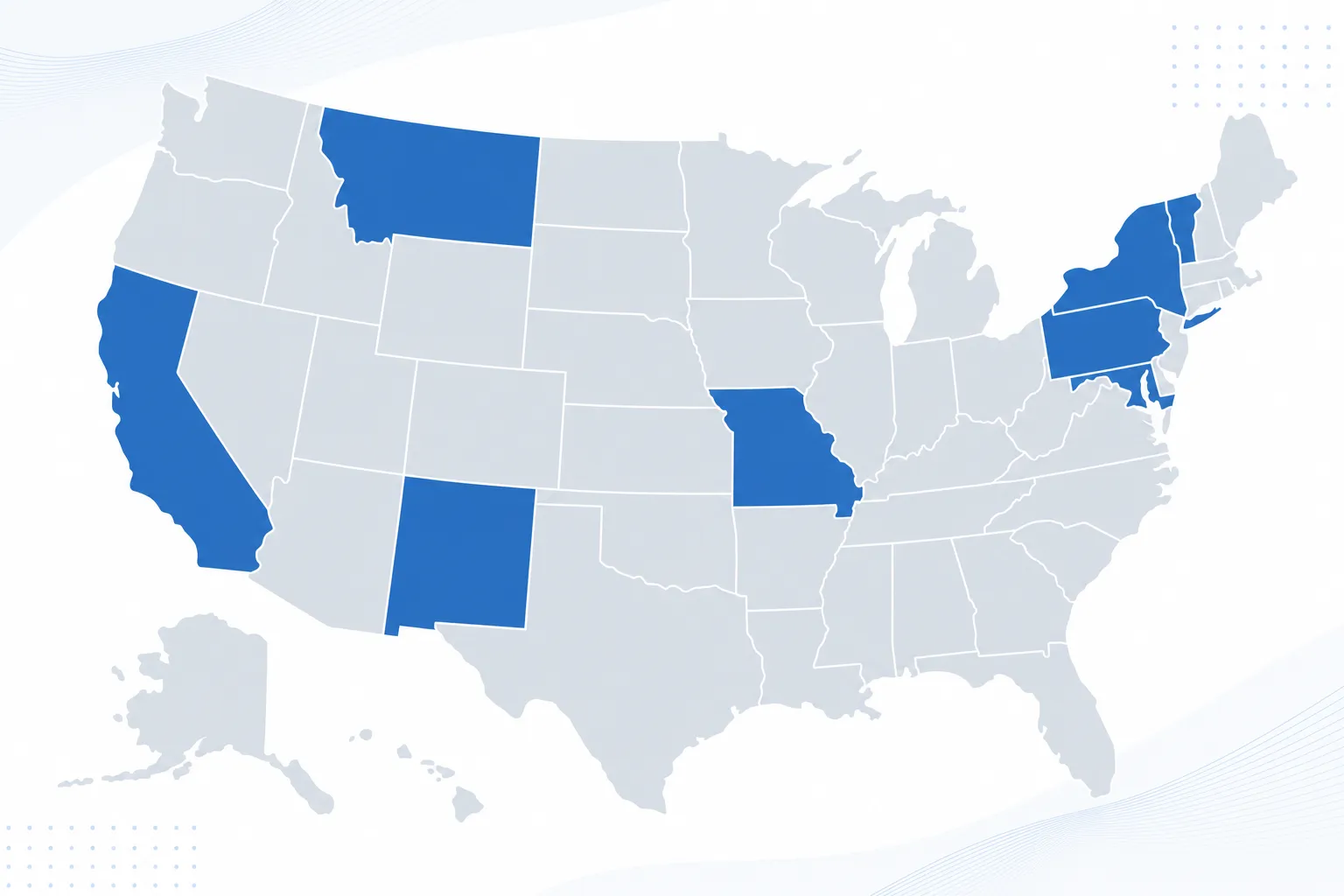
Colorado
Colorado taxes Social Security benefits as ordinary income but offers an exemption. Residents 65 and older can deduct up to $24,000 of federally taxable retirement income, which often covers most or all Social Security income.
Connecticut
Connecticut taxes Social Security benefits only if your federal adjusted gross income exceeds $75,000 (single) or $100,000 (married filing jointly). Above those thresholds, up to 25% of your benefits may be taxable.
Minnesota
Minnesota has one of the more aggressive approaches among states that tax Social Security. Exemptions phase out at relatively modest income levels, leaving many middle-income retirees owing state tax on a portion of their benefits.
Montana
Montana taxes Social Security using federal rules as a starting point, then applies state income tax rates. There is a partial exemption, but it phases out at lower income thresholds compared to most other states.
New Mexico
New Mexico taxes Social Security but exempts benefits entirely for single filers earning under $100,000 and married filers earning under $150,000, making the impact minimal for many retirees.
Rhode Island
Rhode Island exempts Social Security benefits for those at or above full retirement age if income falls below $101,000 (single) or $126,000 (married). Above those limits, benefits are taxed at the standard state rate.
Utah
Utah taxes Social Security as regular income but provides a credit of up to $450 per person that phases out at higher income levels.
Vermont
Vermont taxes Social Security for single filers earning above $45,000 and married filers above $60,000, with full exemptions below those thresholds.
Recent State Tax Changes: What Eliminated Taxes in 2024-2026
The picture has changed quickly. Five states have eliminated Social Security taxes since 2024, a pace that reflects broader political momentum toward retirement-friendly policy across the country.
| State | Year Tax Eliminated |
|---|---|
| Missouri | 2024 |
| Kansas | 2024 |
| Nebraska | 2025 |
| Iowa | 2026 (phased out from 2023) |
| West Virginia | January 2026 |
For retirees watching this space, the trend matters. States that once taxed Social Security benefits are increasingly repealing those rules, which means the list of tax-friendly states for retirement income keeps growing. If you live in one of these five states, or are considering a move, your tax situation may look meaningfully different starting in 2026 than it did just two years ago.
Federal Taxation of Social Security: What Applies Regardless of Where You Live
Before looking at which states offer relief, it helps to understand what the federal government actually does with your Social Security benefits, because federal rules apply no matter which state you retire in.
Up to 85% of your Social Security benefits may be subject to federal income tax, depending on your combined income. The IRS defines combined income for Social Security taxation as your adjusted gross income, plus any nontaxable interest, plus half of your Social Security benefits.
How the Federal Thresholds Work
There are two income brackets that determine how much of your benefit gets taxed:
-
If your combined income falls between $25,000 and $34,000 as a single filer (or $32,000 to $44,000 for married couples filing jointly), up to 50% of your Social Security benefits may be taxable at the federal level.
-
If your combined income exceeds $34,000 as a single filer (or $44,000 for joint filers), up to 85% of your benefits may be subject to federal income tax.
-
If your combined income stays below $25,000 (single) or $32,000 (married filing jointly), none of your Social Security benefits are federally taxed.
These thresholds have not been adjusted for inflation since they were set in the 1980s and 1990s, which means more retirees get pulled into taxable territory each year as Social Security payments increase with COLA. For founders managing payroll tax obligations, payroll tax management for startups covers what you need to know. Where state tax policy becomes genuinely useful is in offsetting this federal burden, since many states either fully exempt Social Security or provide generous deductions that reduce your overall tax load in retirement.
States With No Income Tax: The Complete List for 2026
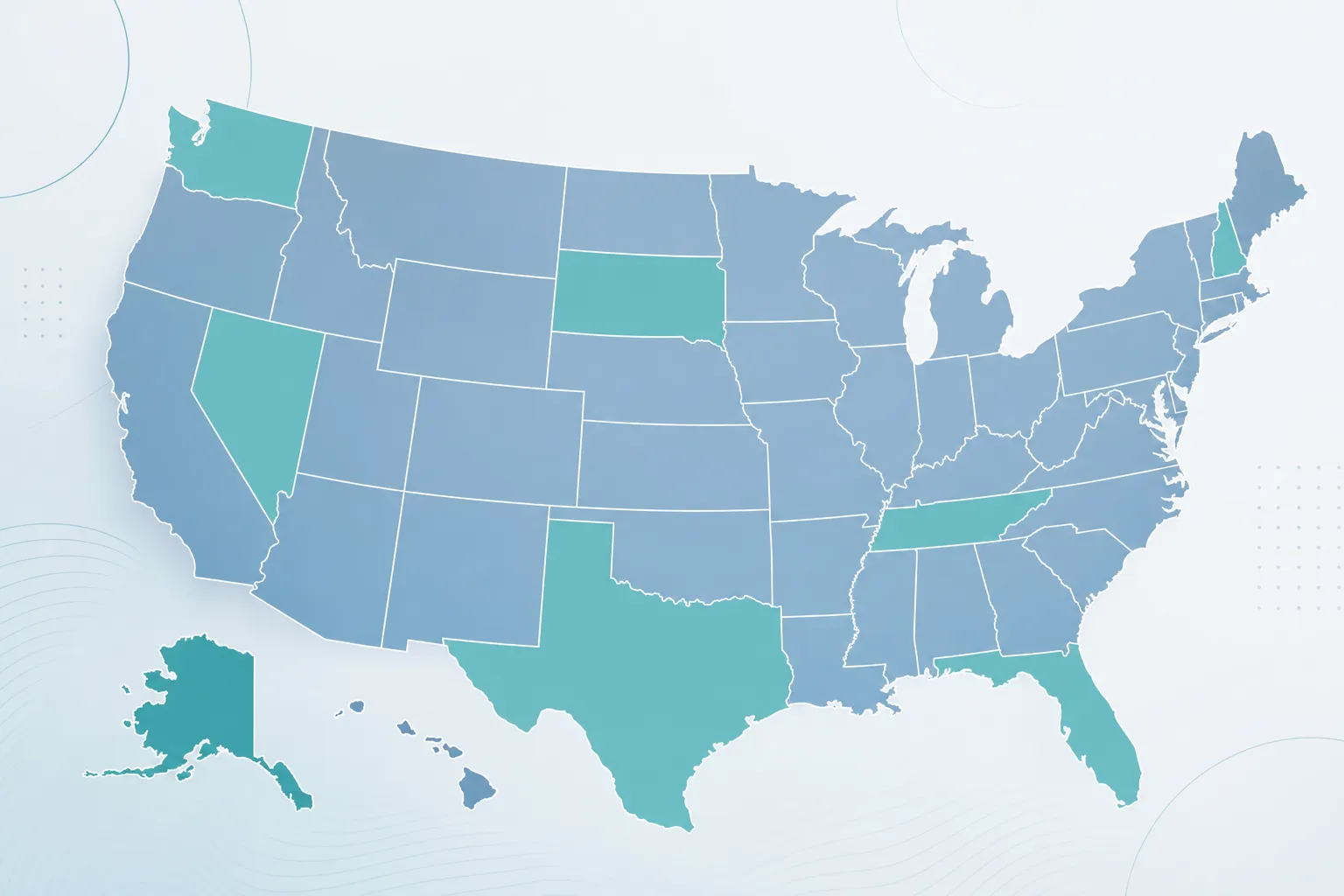
Nine states collect no individual income tax at all, which means Social Security, pension income, and 401(k) withdrawals all pass through free of state taxation.
Here is the complete list for 2026:
-
Alaska has no state income tax and no statewide sales tax, making it one of the most tax-friendly states overall for retirees on fixed income.
-
Florida remains the most popular retirement destination in the country, with no income tax and a warm climate that draws millions of retirees each year.
-
Nevada has no income tax, though its sales tax runs relatively high, so spending habits matter when budgeting in retirement.
-
New Hampshire taxes only interest and dividend income under a phase-out that fully expires after 2024, meaning most retirees see zero state income tax on their retirement distributions.
-
South Dakota has no income tax and relatively low property taxes, giving retirees a straightforward low-tax environment.
-
Tennessee eliminated its investment income tax in 2022 and collects no tax on wages, salaries, or retirement income.
-
Texas has no income tax but funds public services through higher property taxes, which retirees with owned homes should factor into their total tax burden. If you’re launching a company in Texas or another no-income-tax state, you’ll still need to set up payroll correctly from day one.
-
Washington state taxes only certain capital gains above a threshold, leaving Social Security, pensions, and 401(k) income untouched.
-
Wyoming rounds out the list with no income tax and some of the lowest overall tax burdens in the country.
If you live in any of these nine states, state-level taxation is not a factor in your retirement income planning.
How State Taxes on Social Security Actually Impact Your Retirement Budget
Take a retiree with $30,000 in Social Security and $20,000 from an IRA each year. In Florida, that income passes through with zero state tax. Companies hiring across borders face similar complexity with cross-border payroll. Review global payroll solutions that handle international tax compliance. The same household in Minnesota or Connecticut could owe more than $1,200 in state taxes on Social Security alone, depending on combined income.
Over 20 years of retirement, that gap exceeds $24,000. Not abstract policy. That is real spending capacity on healthcare, housing, or travel that simply disappears if you’re writing an annual check to your state every April.
Where you retire is a genuine financial variable. Just as retirees watch costs closely, businesses need to understand payroll services pricing to budget for their workforce. For anyone within a few years of that transition, running the state tax comparison before committing to a location is worth the time.
Property Taxes and Sales Taxes: Why No Income Tax Doesn’t Always Mean Lower Total Burden
Skipping income tax is not the same as skipping taxes entirely. States that collect no income tax have to fund roads, schools, and services somehow, and they usually do it through property taxes, sales taxes, or both. For retirees considering a move, ignoring these numbers means comparing states on incomplete information.
Texas is the clearest example. A retiree owning a $500,000 home there pays approximately $8,000 per year in property taxes. That annual bill can offset years of income tax savings, particularly for retirees on fixed incomes who own their homes outright. Tennessee presents a different version of the same problem: its average combined sales tax rate sits at 9.6%, the second highest in the nation, meaning everyday spending carries a meaningful tax penalty.
The honest calculation for retirement relocation accounts for all three levers: income tax, property tax, and sales tax. A state that looks attractive on one dimension may cost more in total than a state with a modest income tax and lower rates everywhere else.
Tax-Friendly States That Exempt All Retirement Income (Beyond Social Security)
Social Security is only one piece of most retirees’ income picture. For those drawing from pensions, 401(k) accounts, or IRAs alongside Social Security, the states that matter most are those that exempt all of it—the monthly benefit check and everything else.
A few states stand out for how broadly they protect retirement income from state taxation.
States With Full Retirement Income Exemptions
Illinois is the clearest example. The state charges a flat 4.95% income tax on wages and most other income, but exempts retirement income entirely. Pension payments, 401(k) withdrawals, and IRA distributions all avoid state tax regardless of amount.
Mississippi takes the same approach for residents 59.5 and older: pension income, 401(k) distributions, and IRA withdrawals are all exempt from state tax.
Pennsylvania exempts retirement income for those who have reached the state’s qualifying retirement age, covering distributions from 401(k) plans, IRAs, and most pension plans without a dollar cap. Large employers with multi-state retirees should review the best payroll software for large companies to manage complex benefit distributions.
These states offer a meaningful advantage over states that exempt Social Security but still tax pension or 401(k) income, since many retirees pull from multiple sources at once. If your retirement draws on a mix of accounts, the total tax picture across all income types matters far more than any single exemption.
The 2026 Senior Bonus Deduction: New Federal Tax Relief for Retirees
The 2025 legislation added a temporary senior bonus deduction available through 2028. Filers 65 and older can claim an extra $6,000 on top of the standard deduction seniors already receive. If you’re filing jointly and both spouses are 65 or older, that amount doubles to $12,000. Income limits apply: your modified adjusted gross income must fall below $175,000 as a single filer, or $250,000 on a qualifying joint return.
The deduction matters for Social Security planning because it lowers your adjusted gross income, which feeds directly into the IRS combined income calculation. A retiree sitting just above the $34,000 federal taxability threshold could drop back below it with this deduction in place, keeping a larger share of benefits free of federal tax. Pair that with living in a state that fully exempts Social Security, and the relief across both layers adds up in a way that a state-level analysis alone would miss.
Building a Global Workforce While Managing Retirement Planning
Retirement tax planning matters most at the individual level, but companies building distributed teams face a parallel challenge: managing payroll, benefits, and tax compliance across multiple states and countries for employees at every career stage, including those approaching retirement.
That’s where Bolto comes in. Our AI-powered HR solution handles payroll in 150+ countries with 99.8% accuracy per cycle, automates tax withholding across all 50 states, and processes retirement benefits like 401(k) contributions without manual reconciliation. Compare Bolto with other top options in our guide to the best software for payroll in 2026. If your team is spread across Florida, Texas, Illinois, or anywhere internationally, Bolto keeps payroll compliant and on time regardless of where each employee files their taxes in retirement. For teams spanning multiple countries, read our global payroll payments founder’s guide.
One solution. No juggling vendors. The full employee lifecycle, handled.
Final Thoughts on Maximizing Your Retirement Income Across State Lines
State tax treatment of Social Security and retirement withdrawals makes a measurable difference in how far your income stretches over 20 or 30 years. Living in one of the 41 states that exempt Social Security entirely removes one layer of complexity from your tax planning, and pairing that with exemptions on pension or 401(k) income compounds the benefit. Compare property and sales tax rates alongside income tax rules to get the full picture. If you’re running payroll for employees across states and handling retirement contributions, Bolto processes everything with zero manual work on your end.
FAQ
Which states don’t tax Social Security income for retirees?
41 states plus the District of Columbia do not tax Social Security benefits at the state level in 2026. The nine states with no income tax (Alaska, Florida, Nevada, New Hampshire, South Dakota, Tennessee, Texas, Washington, and Wyoming) automatically exempt Social Security, along with 32 additional states including California, New York, Illinois, Pennsylvania, and Georgia.
What states don’t tax 401k withdrawals or pensions?
Illinois, Mississippi, and Pennsylvania offer the broadest exemptions, excluding all retirement income including 401(k) withdrawals, IRA distributions, and pension payments from state taxation regardless of amount. The nine states with no income tax also don’t tax 401(k) or pension income, though these states often offset that with higher property or sales taxes.
States that don’t tax Social Security vs. states with no income tax: what’s the difference?
States that don’t tax Social Security may still tax other retirement income like pensions and 401(k) withdrawals, while the nine states with no income tax exempt all income sources including wages, Social Security, pensions, and investment returns. For retirees drawing from multiple income streams, a state like Illinois (which exempts all retirement income but taxes wages) can be more tax-friendly than a no-income-tax state with high property taxes.
Does the federal government tax Social Security benefits?
Yes. Up to 85% of your Social Security benefits may be subject to federal income tax if your combined income exceeds $34,000 as a single filer or $44,000 for married couples filing jointly. Combined income includes your adjusted gross income, nontaxable interest, and half of your Social Security benefits. These thresholds have not been adjusted since the 1980s and 1990s.
How does moving to a pension friendly state actually change your retirement budget?
A retiree with $30,000 in Social Security and $20,000 from an IRA living in Florida pays zero state tax on that income, while the same household in Minnesota or Connecticut could owe over $1,200 annually in state taxes on Social Security alone. Over a 20-year retirement, that difference exceeds $24,000 in total tax burden, directly affecting spending capacity for healthcare, housing, and discretionary expenses.